Iran’s parliament speaker says negotiations with US focused on lasting security, not normalisation

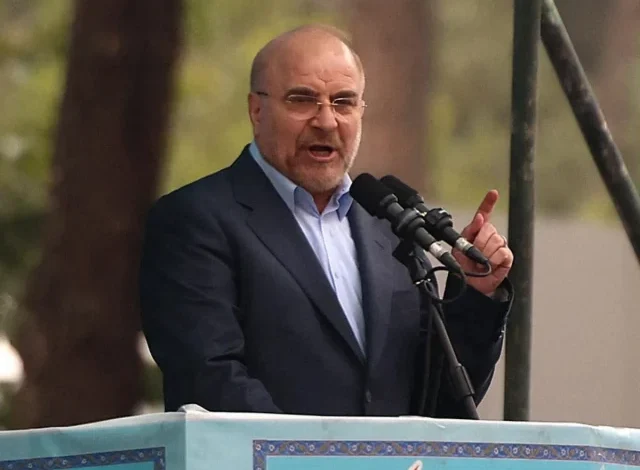
Iranian Parliament Speaker Mohammad Bagher Ghalibaf said on Monday that negotiations with the United States were aimed at ending the war and establishing lasting security rather than normalising relations between the two countries.
In an audio message on his official social media accounts, Ghalibaf said recent tensions stemmed from ceasefire violations and what he described as a maritime blockade.
“The military field, diplomacy, public participation and service to the people are all parts of a single integrated framework,” he said.
Ghalibaf said diplomacy did not prevent military operations and military operations did not prevent diplomacy, arguing that both tools should be employed when necessary.
“The goal of negotiations is ending the war and creating lasting security, not normalising relations with the United States,” he said.
He added that diplomacy should not be viewed merely as closed-door talks and diplomatic gestures, saying Iran must pursue what he described as “a carefully engineered victory based on strength and rationality”.
According to Ghalibaf, developments in Lebanon demonstrated that diplomacy and military action could work together, with some attacks prevented through diplomatic pressure and others through military measures.
He also said successes in both diplomatic and military arenas had enabled support for Lebanon and efforts to counter the “maritime blockade”.
“The choice is not between war and negotiations; each should be used when appropriate,” he said.
The parliament speaker said recent remarks by US President Donald Trump regarding a memorandum of understanding contradicted previously agreed provisions, arguing that they showed Washington was “neither seeking a ceasefire nor dialogue”.
Ghalibaf added that Iran’s armed forces had maintained freedom of action and called for unity, resilience, public trust and vigilance against narratives aligned with adversaries.
Trump says Israel, Iran seeking ‘immediate ceasefire as final peace talks proceed’
US President Donald Trump has said that Israel and Iran are both seeking an immediate ceasefire as final negotiations over a potential peace agreement are underway.
“Both sides, Israel and Iran, are looking to do an immediate CEASEFIRE! Final negotiations on “Peace” are proceeding, subject to ignorance or stupidity getting in its way,” he said in a post on Truth Social on Monday. He added that the blockade would remain in place and continue to be enforced “until a final deal is reached.”
Pezeshkian says Iran still at negotiating table after attacks on Israel halted
Iranian President Masoud Pezeshkian on Monday said Tehran remained at the negotiating table after halting attacks on Israel following the first exchange of fire since the April truce.
“Diplomacy and defence are the two wings of national power; we have neither left the battlefield nor the negotiating table,” Pezeshkian said in a post on X, adding that Tehran “will not retreat in the face of any threat”.
PM Shehbaz calls for renewed diplomatic efforts
Prime Minister Shehbaz Sharif has called for restraint and renewed diplomatic efforts amid the recent escalation of violence in the Middle East in a post on X on Monday. Describing the situation as a “stark reminder of the dangers associated with a tenuous ceasefire,” he said such instability could lead to “unbearable consequences.”
He stated that Pakistan, along with its partners, was working “earnestly and painstakingly” to support efforts toward a peaceful diplomatic solution to the conflict, adding that progress was “just about to be achieved.”
Urging all sides to avoid further escalation, the prime minister appealed for restraint, saying, “We sincerely urge all sides to exercise restraint and give peace a little more chance.” He further emphasised the importance of continuing on the path of peace and diplomacy, which he said held “bright prospects of success” compared to violence and destruction.
Iran halts attacks on Israel but warns of escalation if Lebanon is targeted
Iran’s military command on Monday announced it was halting its operation against Israel after the two sides exchanged fire for the first time since a truce took effect in April.
Iran had delivered a “painful response” to Israel and “accordingly, the cessation of armed forces operations is hereby announced”, the Khatam al-Anbiya command said in a statement carried by state television.
“However, it is emphasised that should acts of aggression and hostility continue, including in southern Lebanon, much more severe and crushing measures than before will follow,” it added.
They added that a continuation of “hostilities and wrongdoing—particularly in southern Lebanon—will be met with far harsher, more devastating actions than those previously taken.”
In an earlier post on Monday, Trump had called on Israel and Iran to “stop shooting”.
His post came after Israel and Iran exchanged strikes today and on Sunday, beginning when Israel bombed Beirut, capital of Lebanon.
Israel struck a petrochemical facility in Iran, while Iranian missiles triggered sirens across central and southern Israel.
‘Shaky Zionist regime has few days left,’ says Iranian supreme leader
Iran’s Supreme Leader Mojtaba Khamenei said Monday that “the shaky Zionist regime has few days left,” amid escalating tensions between Iran and Israel.
Iran launched several missile barrages toward northern Israel late Sunday following an Israeli airstrike on Beirut’s southern suburbs.
Israel later launched strikes on western and central Iran, with explosions reported in several Iranian cities including Tehran, Isfahan, and Tabriz.
Israeli army expects ‘several days’ of fighting with Iran
The Israeli army expects the ongoing military confrontation with Iran will continue for “several days” amid an exchange of attacks between the two countries, Israeli media said on Monday.
“The assessment within the Israeli army is that the confrontation with Iran will continue for several days,” Army Radio said.
The outlet said the army started preparations for a broad call-up of reserve forces, without giving further details.
Meanwhile, Israel’s Home Front Command tightened restrictions on gatherings and movement across the country until Monday evening.
The public broadcaster KAN said new instructions allow gatherings of up to 200 people in open areas and 500 people indoors, provided people can reach a protected area within the required time.
The restrictions also include closing beaches to the public, while workplaces may continue operating if they have access to protected areas within the required time, the same source said.
Iran blames US for latest exchanges of fire with Israel
Overnight exchanges of fire between Iran and Israel will only worsen an already “chaotic diplomatic process” with the United States, Iranian Foreign Ministry spokesperson Esmaeil Baghaei said on Monday, adding that Tehran was exchanging messages with Washington in an atmosphere of “extreme suspicion”.
Baghaei said Israel’s actions in Lebanon, whether carried out with U.S. knowledge and consent or not, were aimed at sabotaging diplomacy. He said Washington, as a party to the April 8 ceasefire, bore direct responsibility for any violations, including attacks attributed to Israel, and he added that the world should be concerned about a broader regional conflict.
“The United States bears direct responsibility for any action the Zionist regime (Israel) takes in relation to violating regional peace and security against Iran,” Baghaei said.
He said the visit of Pakistan’s interior minister to Tehran on Sunday was part of efforts to continue indirect exchanges with Washington.
Separately, Baghaei said Iran would respond to any resolution against it at this week’s meeting of the UN nuclear watchdog’s Board of Governors.
He accused International Atomic Energy Agency chief Rafael Grossi of disregarding the realities of the conflict and holding biased political views that harmed the agency’s legitimacy.
Israel started ‘dangerous game’ by attacking civilian targets, oil industries: Iran
Iran’s Islamic Revolutionary Guard Corps (IRGC) said Monday Israel started “a dangerous game” by carrying out attacks against civilian targets and oil industries.
In a statement carried by the state broadcaster IRIB, the IRGC said it launched a missile attack on Haifa in northern Israel a few minutes ago in retaliation for an Israeli attack on Iran’s Mahshahr petrochemical firm earlier in the day.
It warned the consequences of the current wave of escalation on the global economy will be “the responsibility of the main arsonist in this field, America.”
Flights from main airport in Iranian city Shiraz cancelled
Flights from Iran’s Shahid Ayatollah Dastgheib Airport in the city of Shiraz have been paused because of the “current circumstances”, Iran’s semi-official news agency Mehr reports, according to Al Jazeera.
The flights will be cancelled until 20:00 local time (21:30 PKT), it said.
Israel detects new salvo of Iranian missiles fired towards it
Israel’s army said Monday that it detected a new batch of missiles launched from Iran amid heightened tensions between Tel Aviv and Tehran.
Israeli defense systems were operating to intercept them, the army said in a statement, calling on the public to “follow the instructions” from officials.
Additionally, the military says the air force completed “an extensive strike against strategic defence systems” of Iran, according to Al Jazeera.
Dozens of fighter jets – under the direction of the intelligence directorate – took part in the air strikes, it said, adding defence systems that had recently been deployed in several different areas in Iran were targeted.
Large blast heard in Tehran as strikes continue
The sound of a major explosion has reverberated through Iran’s capital as tit-for-tat attacks with Israel continue.
“It seems that some of the sounds were caused by the activation of air defences in Tehran,” the Mehr news agency reported.
It added that a hostile enemy drone was shot down over Tehran on Monday.
Middle East ‘does not need an escalation,’ EU foreign policy chief warns
EU foreign policy chief Kaja Kallas warned Monday against any further escalation in the Middle East amid heightened tensions between Tel Aviv and Tehran, saying the region does not need renewed conflict.
“Over the night we have seen escalation again. The region does not need an escalation, but actually that the parties sit down to a negotiation table and agree,” Kallas said ahead of a defense ministers meeting in Nicosia, the Greek Cypriot Administration.
Reaffirming that the EU could help facilitate efforts after a ceasefire, she said the immediate priority was securing a halt to the fighting.
“Ceasefire is very much waited. Stopping this war right now, opening the Strait of Hormuz, and then using the time for a longer discussions when it comes to the more difficult topics like nuclear but other critical issues that are there,” she added.
Iran launched several missile barrages toward northern Israel late Sunday following an Israeli airstrike on Beirut’s southern suburbs, which Tel Aviv claimed targeted a Hezbollah command and planning center.
The Israeli attack killed two people and injured 11 others in a preliminary toll.
The Iranian attack marked the first such bombardment since a fragile ceasefire in early April.
A temporary ceasefire mediated by Pakistan was reached on April 8, but negotiations later stalled amid disputes over its implementation and subsequent regional developments.
Israeli airstrike hits Iranian petrochemical facility, says official
An Israeli airstrike targeted a petrochemical firm in Mahshahr, Iran on Monday, causing partial damage to the industrial complex, according to Iranian officials.
According to the Mehr news agency, Valiollah Hayati, deputy governor for security affairs in Khuzestan province, told reporters: “A few minutes ago, the Karun Mahshahr Petrochemical Company was attacked by the Zionist enemy, and part of this industrial complex was damaged as a result of the projectiles hitting it.”
According to Hayati, no casualties or injuries were reported in the airstrike.
He added: “Further details about the extent of damage as well as possible casualties will be announced.”
The Mahshahr Port Governorship has said they will decrease the number of office staff by 30 percent, according to Al Jazeera.
“Employees will be present in all city-level offices at 30% capacity starting today, and citizens should consider this issue in their inquiries,” Mehr news agency reported.
It added that emergency services and electricity, water, and gas relief centres, are exempt from this directive.
Houthis declare ‘total’ ban on Israeli maritime navigation in Red Sea
Yemen’s Houthi group said on Monday that they will impose “a complete and total ban” on Israeli maritime navigation in the Red Sea, stating that Israeli-linked vessels in the waterway will again be targeted.
In a statement, the group said it carried out a missile attack targeting sensitive Israeli targets in the Jaffa region, claiming that “the missile strikes achieved their objectives with precision.”
The missile attacks on Israel came in response to Israeli aggression in Iran, Palestine, Lebanon, Iraq, and Yemen, the group said.
“We affirm that we will respond to escalation with escalation, and our military operations will intensify in accordance to the field developments, the battle, and in conjunction with the axis of Jihad and resistance,” it said.
The Yemeni group “will not stand idly by in the face of the unjust siege imposed on our people and the peoples of the axis of jihad and resistance in Palestine, Gaza, Iran, Lebanon, and Iraq,” the statement added.
Israel’s Netanyahu to convene Security Cabinet following renewed airstrikes with Iran
Israeli Prime Minister Benjamin Netanyahu is set to hold a Security Cabinet meeting on Monday in the wake of renewed airstrikes with Iran, according to Israeli media.
The meeting, which will be attended by a group of key ministers, is scheduled to convene at 11am local time (1pm PKT), The Times of Israel reported, citing an Israeli official.
Iranian missiles trigger sirens across central, southern Israel
Sirens sounded on Monday in several cities in central and southern Israel following missile launches from Iran.
In a statement, the Israeli army said it had detected missile fire from Iran and that air defence systems were working to intercept the incoming projectiles.
Sirens were also heard in occupied East Jerusalem and the West Bank due to the missile launches.
Explosions were heard in the sky as Israeli air defence systems attempted to intercept the missiles.
The Israeli army had previously carried out an airstrike in Dahiyeh district of Lebanon’s capital Beirut despite a ceasefire, prompting Iranian officials to vow retaliation.
Read: Iran’s Ghalibaf threatens US, Israeli assets in ME as ‘legitimate targets’ after strikes in Beirut
Missiles launched from Iran in three waves overnight triggered sirens in several northern Israeli cities, with around 10 missiles reportedly fired toward Israel.
The Israeli army also said that it targeted western and central parts of Iran.
Israel temporarily closes its airspace after intercepting missile from Yemen
Israel temporarily closed its airspace on Monday after intercepting a missile launched from Yemen, according to Channel 12.
The Israeli army said it intercepted the missile after sirens sounded across the greater Tel Aviv area as well as parts of central and southern Israel.
The Israeli Home Front Command had earlier issued warnings following the detection of the missile launch.
Channel 12 later reported that Israeli authorities decided to temporarily shut the country’s airspace following the incident.
Iran’s Revolutionary Guard says Israel used air-launched ballistic missiles in attacks inside country
Iran’s Islamic Revolutionary Guard Corps (IRGC) said early on Monday that Israel used air-launched ballistic missiles in attacks targeting sites inside the country.
The statement came after Israeli and Iranian media reported Israeli strikes across western and central Iran.
The Israeli army claimed its air force struck military sites belonging to the “Iranian regime” in western and central Iran.
Iranian state TV reported explosions in the capital Tehran as well as in Tabriz and Isfahan, while Tasnim News Agency reported blasts near the city of Karaj.
IRNA also reported that at least three explosions were heard in Isfahan.
Israel launches strikes on western, central Iran
Israel launched airstrikes on western and central Iran early on Monday as explosions were reported in several Iranian cities, according to Israeli and Iranian media reports.
The Israeli army claimed its air force struck military sites belonging to the “Iranian regime.”