AI Headshot Apps Remove Hijabs Without User Consent, Raising Questions About Digital Identity
Berkeley Scholar’s Research Reveals How AI Tools Are Changing Religious Identity in Digital Images

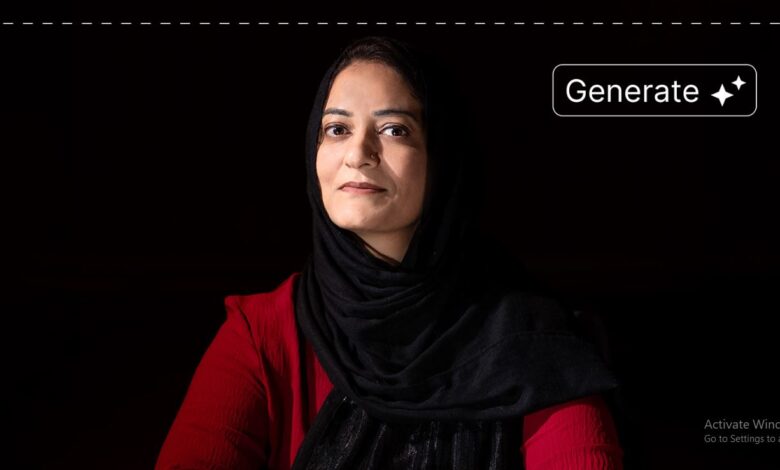
By Pakistan Times USA News Desk | Berkeley, CaliforniaBERKELEY, California: A Pakistani-origin legal scholar at the University of California, Berkeley School of Law has raised important questions about artificial intelligence and digital identity after discovering that multiple AI headshot applications removed her hijab from photographs without her consent.Dr. Mahwish Moazzam, a doctoral candidate at Berkeley Law, began investigating AI photo-editing tools after trying a professional headshot application. Like millions of users, she uploaded her photo expecting a polished professional image suitable for platforms such as LinkedIn. However, the result surprised her — the AI-generated image showed her without a hijab.Initially assuming it was a technical error, Moazzam tested several other AI applications. According to her research, the same pattern appeared repeatedly.
Over time, she examined more than 25 AI headshot platforms, and none returned her original image with the hijab preserved.The researcher noted that while some applications provide options to keep features such as eyeglasses, none asked whether the user wanted to maintain the hijab in the final image.For many Muslim women, the hijab represents faith, identity, and personal choice. Moazzam’s research argues that removing it automatically is not simply an image-editing issue but a broader question about how artificial intelligence understands and represents people.A Pakistani Scholar’s Journey in AI EthicsDr. Mahwish Moazzam’s academic journey reflects the experiences of many Pakistani American families.
Before joining Berkeley, she taught law in Pakistan, including constitutional law, torts, and jurisprudence. She later continued her advanced legal studies in the United States, focusing on human rights and legal protections.Her research explores a growing concern in the technology world: when artificial intelligence systems make decisions that affect identity and representation, who should be responsible?AI, Identity and the Future of TechnologyThe findings have added to a wider global discussion about artificial intelligence, fairness, and accountability. Experts continue to debate how AI systems are designed, what data they learn from, and whether they can unintentionally reproduce existing biases.
AI-generated images become more common in professional profiles, social media, education, and business, researchers say technology companies must consider how digital tools represent people from diverse cultural and religious backgrounds.For Pakistani Americans and Muslim communities worldwide, Moazzam’s research highlights an important question: How can artificial intelligence advance while respecting personal identity, dignity, and cultural values?