Pakistan arrived at the World Cup carrying a record that no other country in the tournament can claim. Four titles, more than anyone else. But by the time their third group match ended against India, that history had done little to change what happened on the pitch.
There had been no win in three matches.
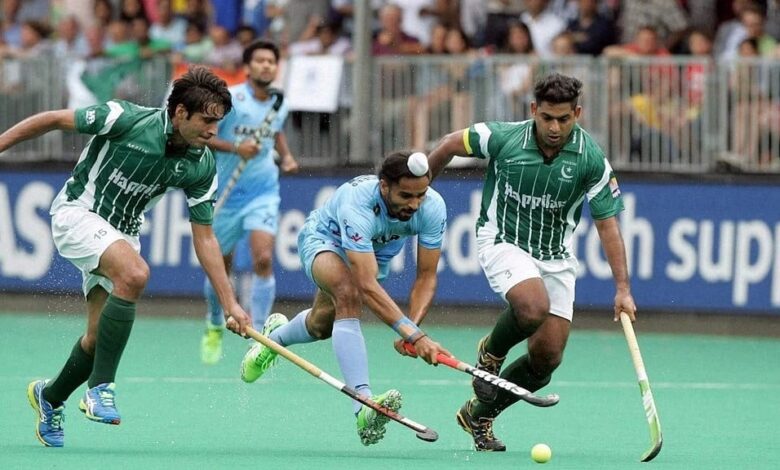
Pakistan began with a defeat against England, recovered to draw with Wales and then lost 5-3 to India. There were periods when the team looked competitive, particularly against Wales and India. There were goals, attacking runs and passages of play that offered glimpses of the Pakistan side that had fought its way back to the World Cup after missing the previous edition. But those periods did not last long enough.
For Touseeq Arshad, who was only 17 when he represented Pakistan at the 2012 London Olympics, the result needs to be looked at against where the team stands today rather than where it once stood.
“If we see realistically, Pakistan didn’t go to win the World Cup or the Pro League. This is the reality,” he says. “There is a big difference in the rankings now. The first target should be that Pakistan at least comes in the top eight teams in the world. After that, it will take two or three years before Pakistan can start finishing on the victory stand, if this setup continues.”
It is a striking assessment for a country that still sits at the top of the World Cup’s historical roll of honour, winning the tournament in 1971, 1978, 1982 and 1994. The fourth title remains the last, and more than three decades later, the conversation around Pakistan hockey is no longer about when a fifth might arrive. It is about how to get back a fighting chance.
Former Pakistan goalkeeper and coach Imran Butt saw the problem at this World Cup much closer to the pitch. “We do not have a defensive structure. We do not have a midfield. There is no creative person in the midfield who can create chances,” he says. “We have good attackers, but we will only utilise them when we have a defensive structure.”
The three matches offered different opponents and different scorelines, but the outcome was the same: Pakistan were out before the next stage.
For a team returning to the World Cup after an eight-year absence, qualification itself had marked a step back onto the biggest stage. What followed, however, was also a reminder of how much ground had been lost while Pakistan was away.
Against England, Wales and India, Pakistan scored seven goals, but conceded 12. For Imran, who spent much of his playing career looking at the game from the goalmouth, those numbers cannot simply be put down to the goalkeeper or a defender making a mistake. He sees a side that is still missing the structure needed to defend as a unit and then build from the back.
The problems were also visible when the team had the ball. Imran points to a lack of control in midfield, chances that were created but not properly developed, and players struggling to read situations as they changed during a match.
“Our issue is that we are an unpredictable team. We can do anything at any time,” he says. “We are not able to read the situation. We play hockey without using our mind. The other teams create things and make decisions together.”
That unpredictability has long been romanticised as part of Pakistan hockey. A player can produce a piece of skill from nowhere, an attack can suddenly open up and, for a few minutes, the team can seem capable of troubling almost anyone. At this World Cup too, those moments were there. The problem was what happened in between them.
“We are not team players. That is our major issue,” Imran says.
Touseeq sees it from a slightly different angle. Pakistan’s traditional attacking game and individual ability have not disappeared, he says, but the space in which those skills once flourished has.