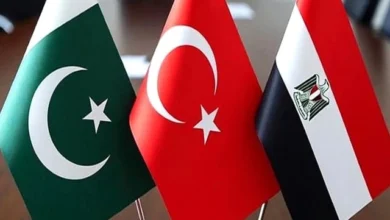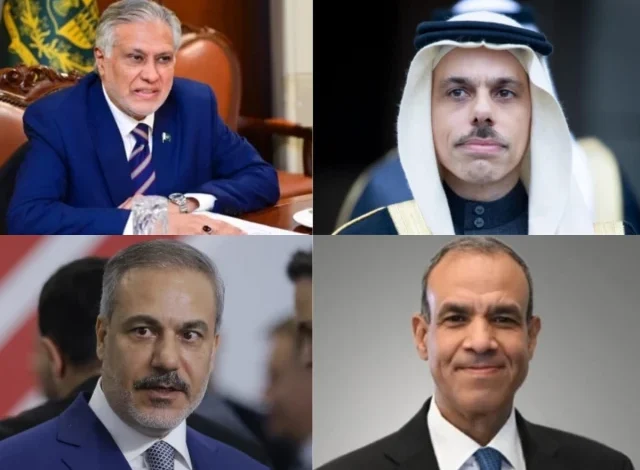
Foreign ministers of Saudi Arabia, Turkiye, and Egypt, will visit Islamabad from March 29 to 30, on the invitation of the Deputy Prime Minister and Foreign Minister, Senator Ishaq Dar, in a bid to de-escalate tensions in the region amid the ongoing US-Israeli war on Iran.
The Ministry of Foreign Affairs announced the visits on X in a statement on Saturday, noting that Prince Faisal bin Farhan Al Saud of Saudi Arabia, Hakan Fidan of Turkiye, and Dr Badr Abdelatty of Egypt will visit Pakistan, holding “in-depth discussions on a range of issues, including efforts to de-escalate tensions in the region.”
The ministry added that the visiting dignitaries will also call on Prime Minister Shehbaz Sharif.
Read: Why is Pakistan involved in efforts to stop the war in Iran?
Further, the statement notes that “Pakistan highly values its relations with the brotherly countries of Saudi Arabia, Turkiye, and Egypt,” saying that the visit “will provide an opportunity to further strengthen Pakistan’s cooperation and coordination with these countries across multifaceted areas of mutual interest.”
Turkish Foreign Minister Hakan Fidan said the meeting would seek to establish a mechanism aimed at de-escalation.
“We would discuss where the negotiations in this war are heading and how these four countries assess the situation and what can be done,” he told broadcaster A Haber late on Friday.
The four nations have been involved in trying to mediate between Washington and Tehran in the war launched by the US and Israel on February 28, and all are acutely vulnerable to threats to energy supplies and trade routes.
Besides inviting the dignitaries to Pakistan, Dar also held a telephonic conversation with Chinese Foreign Minister Wang Yi on Saturday. Lin Jian, the Spokesperson for the Chinese Foreign Ministry, announced the conversation on X.
In the tweet, he noted, “Wang Yi said that China appreciates Pakistan’s unremitting efforts to de-escalate the Iranian situation and supports Pakistan in continuing to play its role as a mediator.”
The spokesperson added that the two sides agreed to work together to promote a ceasefire, resume peace talks, ensure the safety of non-military targets and shipping routes, and support the United Nations.
Read More: FM Dar urges collective efforts to de-escalate Mideast crisis in talks with Iran, Turkish, Iraqi counterparts
These developments come as Pakistan emerges as a key mediator between the United States and Iran in their ongoing conflict which has spread across the Gulf region.
Pakistan has conveyed to Tehran a US proposal for ending the war and offered to host talks, with Iranian officials indicating any negotiations could take place in Pakistan or Turkey.
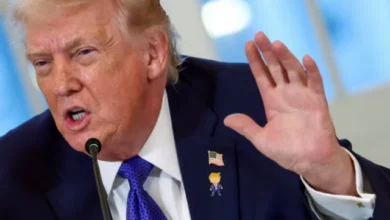
US President Donald Trump has said talks with Iran were going “very well,” but Tehran denies talking with Washington.
Iran has been reviewing the 15-point US proposal, although one official has dismissed it as “one-sided and unfair”. Its demands range from dismantling Iran’s nuclear programme to curbing its missile development and effectively handing over control of the Strait of Hormuz, according to sources and reports.
Turkey’s Fidan told an Istanbul conference on Saturday that the world’s new “polycentric system” requires a solution to guarding vital energy and trade routes. He said Turkey’s high-level dialogue aims to swiftly chart out “actionable steps” to end the war before there is further destruction to the region and global economy.
On Tuesday, Prime Minister Shehbaz Sharif publicly offered Pakistan as a venue for US-Iran peace talks, an offer that received an extraordinary boost when President Donald Trump reposted it on his Truth Social platform, a move widely seen in Islamabad as Washington’s tacit endorsement of Pakistan’s emerging role as a mediator.
On Thursday, Dar confirmed that indirect communication between the US and Iran was underway through messages being relayed by Pakistan, with Turkiye and Egypt also assisting diplomatic efforts aimed at easing the tensions in the Middle East.
Also Read: Pakistan’s good ties with US, Iran pay off
The deputy prime minister has engaged with various political figures as Pakistan continues to call for de-escalation to the conflict; these include discussions with British High Commissioner Jane Marriott, Chinese Ambassador Jiang Zaidong, Deputy Prime Minister of the United Arab Emirates Sheikh Abdullah bin Zayed Al Nahyan, and Iranian Foreign Minister Abbas Araghchi