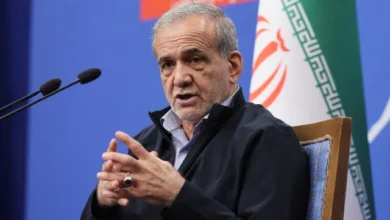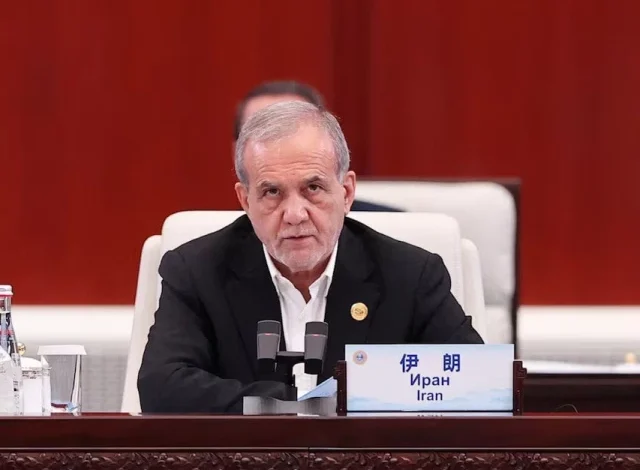
Iranian President Masoud Pezeshkian laid down the conditions on Wednesday for what he said was the war “ignited by the Zionist regime and United States” as the conflict in the Middle East drags on.
In a post on X, he said: “Talking to leaders of Russia and Pakistan, I reaffirmed Iran’s commitment to peace in the region. The only way to end this war — ignited by the Zionist regime & US — is recognising Iran’s legitimate rights, payment of reparations and firm international guarantees against future aggression.”
Meanwhile, the International Energy Agency agreed to release 400 million barrels of oil, the largest such move in its history, to try to rein in crude prices that have soared due to supply shocks from the US-Israeli war with Iran.
The IEA said the release had been backed unanimously by 32 member countries, the sixth such move it has made since its creation in the 1970s. It is aimed at preventing a further rise in oil prices on fears that Iranian attacks will continue to block Middle East oil exports from reaching markets.
“The oil market challenges we are facing are unprecedented in scale, therefore, I am very glad that IEA member countries have responded with an emergency collective action of unprecedented size,” said IEA Executive Director Fatih Birol.
The Paris-based IEA made its comments as French President Emmanuel Macron chaired a meeting of G7 leaders to discuss the issue.
“The emergency stocks will be made available to the market over a timeframe that is appropriate to the national circumstances of each member country,” the IEA said, adding this would be “supplemented by additional emergency measures by some countries”.
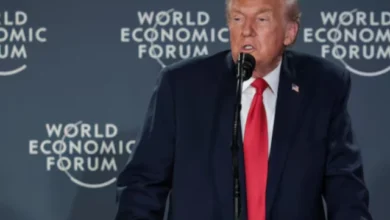
US President Donald Trump, who launched attacks on Iran alongside Israel on February 28, was shown at the end of a video of the G7 meeting chaired by Macron saying, “I think we are having a tremendous impact on the world.”
Oil prices gained nearly 4% on Wednesday as further attacks on ships in the Strait of Hormuz worsened supply-disruption fears, and analysts said the release of reserves was inadequate to ease those concerns.
“I’m not surprised that the market is reacting like this, given that the announcement was priced in,” said Gary Ross, CEO of Black Gold Investors and a veteran oil market analyst. “This situation is not manageable without some demand destruction and much higher prices, unless the conflict ends.”
Analysts have also said the pace of daily IEA stock releases would matter as much as, if not more than, the overall size.
If 100m barrels were released over the next month, the daily pace will amount to around 3.3m barrels per day — a fraction of the current disruption of around 20m bpd, with the Strait of Hormuz between Iran and Oman effectively blocked.
In 2022, IEA member countries released 182.7m barrels of oil and oil products in two stages, which was then the largest in IEA history, when Russia launched its full-scale invasion of Ukraine.
“Pressure came mainly from the US government, which wants this release,” an EU diplomat had said, speaking before the IEA statement.
In the G7 video, Trump said he agreed with the IEA decision.
US Interior Secretary Doug Burgum had welcomed initial reports of the planned release of oil reserves, while saying in an interview with Fox News that he did not believe the world was facing an energy shortage.
“We’ve got a transit problem, which is temporary,” he said. “You have a temporary transit problem that we’re resolving militarily and diplomatically, which we can resolve and will resolve.”
G7 member Japan said it planned to release around 80m barrels from its private and national oil reserves as its contribution.
“Rather than wait for formal IEA approval of a coordinated international reserve release, Japan will act first to ease global energy market supply and demand, releasing reserves as early as the 16th of this month,” Prime Minister Sanae Takaichi said in a broadcast statement.
Western economies coordinate their strategic oil stockpiles through the IEA, which was formed in 1974 after the oil crisis.
IEA members hold emergency stockpiles of more than 1.2 billion barrels, with another 600m in industry stocks held under government obligation.
‘We only think of enemy’s complete surrender,’ says Iran’s IRGC
Meanwhile, Iran’s Islamic Revolutionary Guard Corps (IRGC) said they would continue striking Israeli and US bases across the Middle East until it perceives the threat of war against Iran has ended.
“We only think of the enemy’s complete surrender,” the IRGC said in a statement on its official outlet, Sepah News. The IRGC claimed that its 38th wave of attacks late Tuesday hit the US Al-Udairi base in Kuwait, sending more than 100 troops to nearby hospitals.
The IRGC also claimed missile and drone strikes on US naval infrastructure at Mina Salman port in Bahrain, home to the US Fifth Fleet, as well as attacks on Kuwait’s Ali Al-Salem Air Base and Mohammed Al-Ahmad Naval Base.
Earlier on Tuesday, the IRGC said it targeted a satellite communications centre south of Tel Aviv and military sites in Beer Yaakov, West Jerusalem, and Haifa with Khorramshahr missiles. It also claimed attacks on several US positions in Erbil, Iraq.
Separately, Iran’s army reported early on Wednesday drone strikes on Israeli Military Intelligence, the Unit 8200 cyber division, a Green Pine radar installation, and a submarine command center at Haifa’s naval base.
The flare-up follows joint US-Israeli strikes on Tehran and other Iranian cities on February 28, which killed former Supreme Leader Ali Khamenei and senior military commanders. In response, Iran has carried out repeated missile and drone attacks on US and Israeli targets in the region.
In the latest strike on Iranian soil, Bank Sepah, a major bank in Iran, said a US-Israeli missile hit one of its Tehran buildings around 1am local time Wednesday, injuring and killing employees on the overnight shift. State broadcaster IRIB confirmed the attack but did not provide casualty figures.
The Khatam al-Anbiya Central Headquarters — Iran’s primary military command — warned the strike would prompt retaliation, saying the attack on a bank “freed” Iran to target US and Israeli financial institutions across the region.
The Military spokesman Ebrahim Zolfaghari urged civilians to stay at least one kilometre away from such facilities.
Trump says Iran war will end ‘soon’ as there is ‘practically nothing left to target’
Trump has said the war with Iran will end “soon” because there is “practically nothing left to target.” “Little this and that… Any time I want it to end, it will end,” he said during a five-minute phone interview with Axios on Wednesday.
Even as Trump publicly signals his ‘Operation Epic Fury’ has largely accomplished its objectives, US and Israeli officials say there has been no internal directive on when fighting might stop.
IRGC hits two vessels attempting to navigate Strait of Hormuz
Iran’s Islamic Revolutionary Guard Corps (IRGC) said on Wednesday that they struck two vessels after they ignored warnings from the IRGC Navy and attempted to navigate the strategic Strait of Hormuz.
“The vessel ‘Expres Room’, owned by the Zionist regime, flying the Liberian flag, was struck with Iranian projectiles this morning after ignoring warnings from the IRGC Navy,” the IRGC said in a statement posted on X handle ‘True Promise’, the codenamed Iran has given to its retaliatory operation against the US-Israel attacks in the Islamic republic.
“The container ship ‘Mayuree Naree Bangkok’ was also struck a few hours earlier after ignoring alerts and warnings from the IRGC Navy and illegally insisting on passing through the Strait of Hormuz,” the Guards further claimed.
“We will not allow even a single litre of oil to pass through the Strait of Hormuz for the benefit of the US, the Zionist regime or their partners,” it added.
In a separate post, the Iranian forces claimed to have delivered “a devastating blow” to the Israeli military intelligence directorate.
“The Iranian army attacked with drones this morning, hitting various targets in the occupied territories, including the military intelligence directorate, known as AMAN, Unit 8200, the Green Pine radar, as well as the submarine headquarters building at the naval base in Haifa,” it added.
Earlier, Iran’s military command said the world should be prepared for oil to hit $200 a barrel, as three more ships came under attack in the blockaded Gulf.
Iran fired at Israel and targets across the Middle East, demonstrating it could still fight back and disrupt energy supplies despite what the Pentagon has described as the most intense US-Israeli strikes yet.
Oil prices that shot up earlier this week have eased, and stock markets have rebounded, with investors betting for now that Trump will find a quick way to end the war he began alongside Israel nearly two weeks ago.
But so far, there has been no let-up on the ground, or any sign that ships can safely sail through the Strait of Hormuz, where a fifth of the world’s oil has been blockaded behind a narrow channel along the Iranian coast in the worst disruption to energy supplies since the oil shocks of the 1970s.
“Get ready for oil to be $200 a barrel, because the oil price depends on regional security which you have destabilised,” Ebrahim Zolfaqari, spokesperson for Iran’s military command, said in comments addressed to the US.
After offices of a bank in Tehran were hit overnight, Zolfaqari also said Iran would respond with attacks on banks that do business with the United States or Israel. People across the Middle East should stay 1,000 metres from banks, he added.
A senior Israeli official told Reuters Israeli leaders now privately accept that Iran’s ruling system could survive the war. Two other Israeli officials said there was no sign Washington was close to ending the campaign.
IRGC identifies Google, Microsoft, Palantir, IBM, Nvidia and Oracle as new targets
The IRGC-affiliated Tasnim news agency has released a list of offices and infrastructure run by top US companies with Israeli links whose technology has been used for military applications, describing them as “Iran’s new targets”.
“As the scope of the regional war expands to infrastructure war, the scope of Iran’s legitimate targets expands,” it said.
The companies include Google, Microsoft, Palantir, IBM, Nvidia and Oracle, and the listed offices and infrastructure for cloud-based services are located in multiple Israeli cities, as well as in some Gulf countries.
Iran’s Araghchi urges UN chief to condemn aggression
Iran’s Foreign Minister Seyed Abbas Araghchi held a telephone conversation with UN Secretary General Antonio Guterres in which they “discussed and exchanged views regarding the latest developments following the attack and aggression of the US and Israeli regime against Iran,” the Islamic Republic’s Foreign Ministry wrote on X.
Araghchi discussed what the ministry termed “the various dimensions of the aggressive attack and American-Zionist war crimes,” noting that schools, hospitals, residential areas, as well as historical sites, have been targeted. These actions, the Iranian foreign minister said, “constitute a clear violation of international law and the fundamental principles of humanitarian law.”
In reference to the human consequences and damages due to the attacks, Araghchi called for “a decisive and explicit condemnation of these actions by the international community and responsible institutions,” the ministry wrote.
He further stressed Iran’s “inherent right to defend itself against this imposed war,” and stated that the Islamic Republic had warned relevant parties in the region and beyond, that in the event of US military action against Iran, the latter would target all American facilities and bases in the region. This, he said, would lead to the war expanding across the entire region.
“Araghchi emphasised that such actions would be taken within the framework of the right to self-defence and based on the recognised norms of international law,” the ministry wrote.
Furthermore, he referred to the UN’s responsibility to maintain international peace and security, noting the Iranian government’s expectation for Guterres to “adopt stronger and more responsible positions in explicitly condemning the aggression and crimes committed.” He noted that silence or inadequate reactions to such actions could pave the way for continued instability and the escalation of regional tensions.
Guterres, meanwhile, “emphasised the need to respect the principles of international law and avoid escalation of tension,” stating that there is no doubt regarding Iran’s right to defend itself.
Iranian FM, India’s Jaishankar discuss regional stability
Separately, Araghchi held a phone conversation with his Indian counterpart Subrahmanyam Jaishankar, during which they discussed regional developments.
In a post on X, Iran’s Foreign Ministry said that Araghchi “detailed the crimes committed by the US and Israeli regime against the Iranian nation over the past 11 days.” This included the missile attack on a girls’ elementary school in Minab as well as attacks on civilian sites and public service centres.
According to the ministry, Araghchi emphasised Iran’s determination to defend Iranian integrity. He “described the aggressive act by the US and the Israeli regime as a violation of the fundamental principles and rules of the United Nations Charter and international law, noting that all governments have a responsibility to condemn this military aggression and blatant law-breaking.”
The foreign minister also discussed the consequences of the military aggression on the security of shipping and vessel traffic through the Strait of Hormuz. Araghchi told Jaishankar that “the insecure situation and problems arising for shipping in the Persian Gulf are a result of the aggressive and destabilising actions of the United States,” adding that the international community must hold the US accountable for this situation.
Jaishankar emphasised the “importance of continuing and enhancing bilateral relations between Tehran and New Delhi,” and also stressed the need for consultations to help restore regional stability.
Iran launches fresh regional strikes as oil fears mount and global markets reel
Iran unleashed early on Wednesday defiant new strikes around the region, including drones targeting a Saudi oilfield, as the International Energy Agency reportedly proposed its largest-ever oil reserve release to calm markets and prices.
The war sparked by US-Israeli strikes on Iran has spread across the region and caused spiking energy costs, forcing fuel rationing, price hikes and even school closures globally.
G7 leaders will meet by video conference later Wednesday to discuss the war’s economic consequences, particularly the “energy situation,” the French presidency said, with the IEA also due to decide on a proposal for its largest-ever oil reserve release, the Wall Street Journal reported.
Al Jazeera describes explosions in the sky over Doha as air defence systems intercepting Iranian missiles.
The United States on Tuesday said it was hitting Iranian ships capable of mining the Strait of Hormuz, the crucial passageway for oil that has been effectively closed by Iranian threats.
Israel also launched new waves of strikes both in Beirut and Tehran, where residents hunkered down after being smothered by black rain from Israeli bombing of fuel depots.
On Wednesday morning, Israeli strikes across Lebanon killed 16 and wounded 26, according to Anadolu Agency. Additionally, an Israeli airstrike targeted a residential apartment in the Aisha Bakkar area of Beirut, causing destruction. One person has been reported killed by Israeli drone in Nabatieh, southern Lebanon, and Israeli warplanes strike near Rayak-Baalbek highway in eastern Lebanon, according to Al Jazeera.
Read: Pete Hegseth says Tuesday ‘most intense day’ of US attacks on Iran
Al Jazeera showed footage of explosions and smoke near Mehrabad International Airport in Tehran as US-Israeli strikes continue, and according to Tasnim news agency, at least 9 people have been killed in the US-Israeli attacks on Iran’s Aligudarz city.
The US military posted video footage of Iranian boats blasted apart, saying it had destroyed 16 minelayers near the Strait of Hormuz, through which one-fifth of the world’s oil passes.
“If for any reason mines were placed, and they are not removed forthwith, the Military consequences to Iran will be at a level never seen before,” Trump wrote on social media.
Trump faces mounting political risks over the surging cost of oil, months before the US elections. Crude prices spiked 5% late on Tuesday, though they turned lower today after the reserve release report.
Trump has offered for the US military to accompany tankers through the strait, but his administration acknowledged that a post by the energy secretary announcing a first such escort was untrue.
With an eye on jittery markets, Trump on Monday said the war would be short, although his defence secretary, Pete Hegseth, then said Tehran would be hit by unprecedented fire on Tuesday.
‘Not seeking ceasefire’
Iran’s government defiantly said that it carried out its own “most intense and heaviest” salvo early Wednesday, firing missiles for three hours at cities across Israel.
AFP journalists heard air raid sirens and explosions in Jerusalem. Emergency services reported no immediate injuries, although Channel 12 said several people were hurt in Tel Aviv. And new salvos were reported early on Wednesday, with no reports of injuries.
Iran’s Revolutionary Guards said they also fired on Bahrain and Iraqi Kurdistan, both of which have a heavy US presence.
Read More: Erdogan tells Iran violation of Turkey’s airspace ‘cannot be excused for any reason’
Drone and ballistic missiles were intercepted across the Gulf on Wednesday morning, including two drones heading to an oil field in Saudi Arabia, its defence ministry said.
Earlier, Iranian parliament speaker Mohammad Bagher Ghalibaf, a former top commander in the elite Revolutionary Guards, said in an English-language post on X: “Certainly we aren’t seeking a ceasefire.”
“We believe the aggressor must be punished and taught a lesson that will deter them from attacking Iran again,” he added.
Seven US military personnel have been killed and about 140 injured since the start of the war, according to the Pentagon.
Fright in Tehran
The United States and Israel launched the war on February 28 with an attack that killed Iran’s veteran leader, Ayatollah Ali Khamenei. His son Mojtaba Khamenei has been named his successor.
According to news agency Al Arabiya, Iran’s new supreme leader, Mojtaba Khamenei, is “safe and sound” despite reports of an injury during the war with Israel and the United States, said the son of the Iranian president on Wednesday.
The attacks came weeks after Iranian authorities quelled mass protests, although the United States and Israel say they are not necessarily seeking to topple the Islamic Republic.
In Tehran, one woman in her 40s said she found some reassurance in her impression that the bombings “don’t target ordinary buildings”.
But she said, “The noise of the bombings is extremely disturbing.”
Also read: Iranian official says ‘not seeking ceasefire’ as fresh missile attack targets Israel’s Haifa
Iran has sought to extract a heavy price on the global economy, attacking the showcase cities of the Gulf, including their gleaming airports and energy production.
The UAE’s biggest oil refinery at Ruwais was closed on Tuesday as a precaution after a drone attack on the industrial complex that houses it caused a fire, a source familiar with the situation told AFP.
AFP journalists also reported explosions in Qatar, where a suspension of LNG exports has sent European energy prices sky-high.
“There would be catastrophic consequences for the world’s oil markets the longer the disruption goes on, and the more drastic the consequences for the global economy,” Saudi oil giant Aramco’s president and CEO Amin H. Nasser told journalists.
“It’s absolutely critical that shipping resumes in the Strait of Hormuz.”
War effects spreading
Iraq and Lebanon, both home to Shia fighters tied to Iran, have become proxy grounds of the war, with devastating consequences.
In Iraq, Iranian-linked groups said five of their fighters died in what they suspected to be strikes by the United States.
Demonstrators had sought to storm the US embassy in Baghdad, and at least five drones landed Tuesday at a military base at the Baghdad International Airport, home to a US diplomatic facility.
In Lebanon, authorities said that Israeli attacks killed at least 486 people and injured more than 1,300 others between March 2 and Monday, with new strikes targeting Beirut’s southern suburbs early Wednesday.
Iran complained to the United Nations that four of its diplomats died in a strike on a seafront hotel in central Beirut on Sunday that Israel said had been aimed at “key commanders” from Iran’s Revolutionary Guards.
The effects of the war are being felt globally, with the UN trade and development agency warning of rising costs for essentials like fuel and food, hitting the world’s most vulnerable people.
In Egypt, where the cost of fuel increased by up to 30%, mother-of-six Om Mohamed fretted about the future.
“We were barely getting by as it is. I don’t know how people will manage,” she told AFP at a Cairo market.