Iran’s Pezeshkian says US doesn’t believe in diplomacy as IRGC threatens to target US tech firms

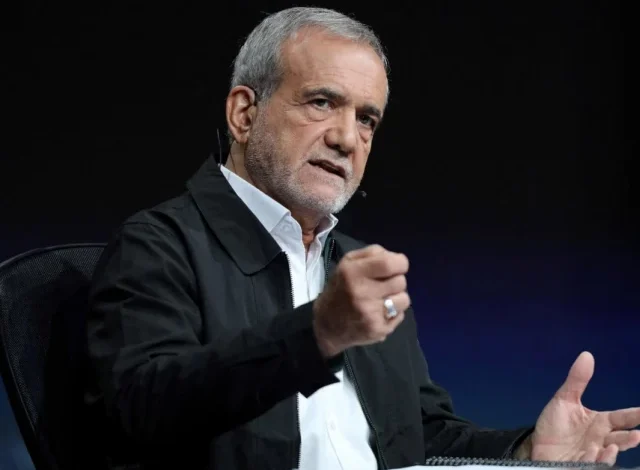
Iranian President Masoud Pezeshkian said that Iran was attacked twice during negotiations, arguing this showed that the United States does not believe in diplomacy, Al Jazeera Arabic reported on Tuesday.
In remarks from the Iranian presidency, Pezeshkian also said tensions in the Strait of Hormuz were the result of what he described as American-Zionist hostile actions against Iran.
He criticised what he called biased European positions towards Iran during a call with the president of the European Council.
Meanwhile, Iran’s Revolutionary Guards warned they would target leading US technology firms such as Boeing, Microsoft, Apple and Google if more Iranian leaders were killed in “targeted assassinations.”
“These companies, starting from 8:00 p.m. (1630 GMT) Tehran time on Wednesday, April 1, should expect the destruction of their relevant units in exchange for every assassination in Iran,” the Guards said in a statement listing 18 companies it alleged were complicit in the killing of officials.
The statement claimed that these companies contribute to the “design and tracking assassinations through advanced American ICT and AI companies,” and declared that “in response to these terrorist acts… the key institutions involved will henceforth be considered legitimate targets.”
“We advise the employees of these institutions to immediately leave their workplaces to preserve their lives,” the statement added.
The companies are: Cisco, Intel, Microsoft, Google, Apple, Meta, Oracle, IBM, Dell, NVIDIA, Palantir, JPMorgan, Tesla, Boeing, GE, HP, and G42.
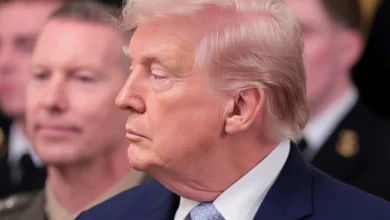
The threat comes as US President Donald Trump said he was conducting diplomacy aimed at ending the conflict, while also threatening to amplify the US-Israeli campaign against the Islamic republic.
Earlier, President Trump urged countries that did not help in the US-Israeli strikes on Iran to buy American oil and go to the Strait of Hormuz and “just take it”.
Trump singled out Britain and France as unhelpful in the month-long war that has roiled global markets, driven up energy prices and seen Iran effectively close oil tanker traffic through the Strait.
“All of those countries that can’t get jet fuel because of the Strait of Hormuz, like the United Kingdom, which refused to get involved in the decapitation of Iran, I have a suggestion for you: Number 1, buy from the US, we have plenty, and Number 2, build up some delayed courage, go to the strait, and just take it,” Trump said in a Truth Social post.
“You’ll have to start learning how to fight for yourself, the USA won’t be there to help you anymore, just like you weren’t there for us,” Trump wrote, adding, “The hard part is done. Go get your own oil!”
He also criticised France for not letting planes carrying military supplies to Israel fly over French territory.
Meanwhile, in a press briefing, US Secretary of War Pete Hegseth said that the next few days in the Middle East conflict will be decisive, adding that there had been major desertions from the Iranian armed forces.
“We have more and more options, and they have less … in only one month we set the terms, the upcoming days will be decisive,” Hegseth said. “Iran knows that, and there’s almost nothing they can militarily do about it,” he added.
Hegseth, citing intelligence, said the strikes were damaging the morale of the Iranian military. This, he said, was triggering widespread desertions, key personnel shortages and causing frustration amongst senior leaders.
He also said he had visited troops in the Middle East on Saturday to witness the military operation against Iran.
On the Strait of Hormuz, Hegseth said more vessels were flowing through the strait thanks to Trump, adding that the world should be prepared to step up and that objectives had been very clear.
“Trump has led, the US laid the conditions for success,” he said.
On the question of US troops in Iran, Hegseth said no option would be foreclosed, adding that the point was to be unpredictable on whether the US deployed boots on the ground or not. He said the timeline could be “four, six, eight weeks or any number”.
Top US General Caine added that US troops were out there and Iran should consider diplomacy.
On negotiations, Hegseth said talks were ongoing and gaining strength, calling the back and forth a productive development. “We want a deal, if not we’re prepared to continue,” he said, adding that the US remained committed to a conflict that ended on “our terms and Trump’s terms”.
Asked about reports of Russia and China aiding Iran, Hegseth said: “As far as Russia and China, we know exactly what they’re doing, what they are or are not doing.
“We don’t have to air publicly what all of that is, but where necessary, we’re addressing it, we’re mitigating it, or we’re confronting it head-on.”
On NATO, he said it would be Trump’s decision on what that looked like after Iran.
EU calls for restraint
President of the European Council Antonio Costa, in a post on X, termed the current situation in the Middle East as “extremely dangerous.”
Costa wrote that he spoke with Iranian President Masoud Pezeshkian, saying “I urged for de-escalation and restraint, the protection of civilians and civilian infrastructure, and the need for all parties to fully respect international law.”
He added that the “loss of innocent lives, including in the Minab school, is deeply regrettable.”
To de-escalate the situation, Costa wrote, he urged Iran to “stop the unacceptable attacks on countries in the region and to engage positively on the diplomatic track, notably with the UN to ensure the freedom of navigation in the Strait of Hormuz.”
There must be space for diplomacy, he said, adding that the European Union “stands ready to contribute to all diplomatic efforts to reduce tensions and for a lasting solution to end the hostilities, while addressing the broader security concerns posed by Iran.”
We will not authorise the use of [military bases] for any acts related to the war in Iran: Spanish defence minister
Italy reportedly denied US military aircraft permission to land at its Sigonella air base in Sicily, local sources have confirmed.
According to the local newspaper Corriere della Sera, a US flight plan was submitted for several bombers to stop at Sigonella before continuing their journey to the Middle East. However, the plan was submitted without prior authorisation or consultation with Italian military authorities. The incident occurred a few days ago while the US planes were already en route.
This development follows Spain’s decision on Monday to close its airspace to US planes involved in the Iran conflict. Spain’s Defence Minister, Margarita Robles, stated, “We will not authorise the use of Morón and Rota [military bases] for any acts related to the war in Iran,” further emphasising that Spain had clearly communicated this stance to the US government from the outset.
Crude oil tanker hit by Iranian strike after Trump’s latest threats
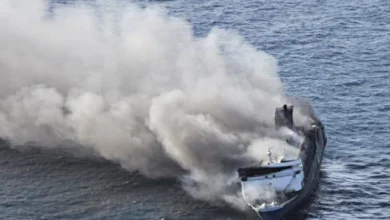
Iran attacked and set ablaze a fully loaded crude oil tanker off Dubai on Monday, as US President Donald Trump warned the US would obliterate Iran’s energy plants and oil wells if it did not open the Strait of Hormuz.
The strike on the Kuwait-flagged Al-Salmi is the latest in a string of strikes on vessels disallowed to cross the Strait by missiles and explosive air and sea drones in the Gulf and Strait of Hormuz since the US and Israel attacked Iran on February 28.
The conflict has spread across the Middle East, killing thousands of civilians in Iran, Lebanon and other Gulf countries, disrupting energy supplies and threatening to send the global economy into a tailspin.
Crude oil prices briefly spiked anew after the attack on the tanker, which can carry around 2 million barrels of oil worth more than $200 million at current prices.
Kuwait Petroleum Corp, the ship’s owner, said the attack happened early on Tuesday, causing a fire and hull damage, but there were no reported injuries.
Authorities in Dubai later said they had been able to bring the fire under control following a drone attack on the tanker. No injuries have been reported, they said.
The jump in oil and fuel prices has started to weigh on US household finances and become a political headache for Trump and his Republican Party ahead of the November midterm elections, having vowed to lower energy prices and ramp up US oil and gas production.
The US national average retail price of gasoline crossed $4 a gallon for the first time in more than three years on Monday, data from price-tracking service GasBuddy showed, as tightening global supplies push US crude prices above $101 a barrel.
Israeli interceptor depletion
Israeli news outlet Haaretz reported that, according to official Israeli sources, the success rate of Iranian missiles has reached 80% and missiles are not being intercepted.
According to the article, the Royal United Services Institute for Defence and Security (RUSIDS) says that Israel has fired approximately 80% of its Arrow 2 and Arrow 3 interceptors, 54% of its David’s Sling missiles, and 45% of the American-made THAAD interceptors it operates. Only 20% of Iron Dome interceptors have been used.
For the US, RUSIDS estimates that 60% of the THAAD missiles deployed to protect Gulf states from Iranian attacks have already been expended.
Trump seeks to end war without reopening Hormuz
Trump is ‘willing to end war without reopening Hormuz,’ according to the Wall Street Journal, citing US officials. Trump and his aides have assessed in recent days that attempting to pry open the chokepoint would push the war beyond the president’s four-to-six-week timeline.
White House press secretary Karoline Leavitt later said Trump wanted to reach a deal with Tehran before an April 6 deadline he set last week after extending an earlier deadline he had set for Iran to open the Strait of Hormuz.
Leavitt said talks with Iran were progressing, adding that what Tehran says publicly differs from what it tells US officials in private
Trump decided that the US should achieve its main goals of crippling Iran’s Navy and its missile stocks, winding down the fighting, WSJ reported. Washington would proceed to diplomatically pressure Tehran to resume trade, pressing allies in Europe and the Gulf to take the lead.
Trump threatened on Monday that US forces would obliterate Iran’s energy plants and oil wells if it did not open the Strait of Hormuz.
In an Al Jazeera interview on Monday, US Secretary of State Marco Rubio said that President Donald Trump “always prefers diplomacy”, but warned Iran of “real consequences” over the partial closure of the Strait of Hormuz.
Iran has largely rejected calls to open the passage and has attacked several tankers passing through Hormuz in the past month. Tehran can block the Strait for an indefinite amount of time until a ceasefire is reached.
Read: Trump says US in talks with ‘more reasonable’ Iran regime, warns of attacks if no deal
Iran strikes Dubai oil tanker
Iran attacked and set ablaze a fully loaded crude oil tanker off Dubai on Monday.
The apparent strike on the Kuwait-flagged Al-Salmi is the latest in a string of assaults on merchant vessels by missiles or explosive air and sea drones in the Gulf and Strait of Hormuz since the US and Israel attacked Iran on February 28.
The month-long conflict has spread across the Middle East, killing thousands, disrupting energy supplies and threatening to send the global economy into a tailspin.
Crude oil prices briefly spiked anew after Kuwait’s state news agency reported the attack on the tanker, which can carry around 2 million barrels of oil worth more than $200 million at current prices.
Kuwait Petroleum Corp, the ship’s owner, said work was underway to assess damage and warned of a possible oil spill.
Authorities in Dubai later said they had been able to bring the fire under control following a drone attack on the tanker. No injuries have been reported, they said.
Read More: Dar says Turkiye, Saudi Arabia, Egypt back dialogue as only way to ‘permanently end’ US-Iran war
Troops deploy as talks continue
Attacks by both sides are showing no signs of easing, with fears of a wider conflict growing.
Iran-aligned Houthis entered the war by firing missiles and drones at Israel in recent days and Turkey reported a ballistic missile launched from Iran had entered Turkish airspace before being shot down by NATO air and missile defences.
Israel carried out missile strikes on what it called military infrastructure in Tehran and infrastructure used by Iran-backed Hezbollah in Beirut, leaving black smoke hanging over the Lebanese capital.
Three United Nations peacekeepers from Indonesia were killed in two separate incidents in southern Lebanon.
Thousands of soldiers from the US Army’s elite 82nd Airborne Division have started arriving in the Middle East, two US officials told Reuters on Monday, part of a reinforcement that would expand Trump’s options to include the deployment of forces inside Iranian territory, even as he pursues talks with Tehran.
Iran said earlier on Monday it had received US peace proposals via intermediaries, following talks on Sunday between the foreign ministers of Pakistan, Egypt, Saudi Arabia and Turkey.
Iranian Foreign Ministry spokesperson Esmaeil Baghaei said the proposals were “unrealistic, illogical and excessive”.
“Our position is clear. We are under military aggression. Therefore, all our efforts and strength are focused on defending ourselves,” he told a press conference.
Soon after Baghaei’s remarks, Trump said the US was in talks with a “more reasonable regime” to end the war in Iran, but also issued a new warning over the Strait of Hormuz.
“Great progress has been made but, if for any reason a deal is not shortly reached, which it probably will be, and if the Hormuz Strait is not immediately ‘Open for Business,’ we will conclude our lovely ‘stay’ in Iran by blowing up and completely obliterating all of their Electric Generating Plants, Oil Wells and Kharg Island,” Trump wrote in a social media post, also threatening to attack Iranian desalination plants.
The White House said Trump was considering asking Arab nations to pay for the cost of the war. “It’s an idea that I know that he has and something that I think you’ll hear more from him on,” Leavitt said in response to a reporter’s question about the idea.
His administration requested an additional $200 billion in funding for the war. The request faces stiff opposition in the US Congress, which must approve new spending.