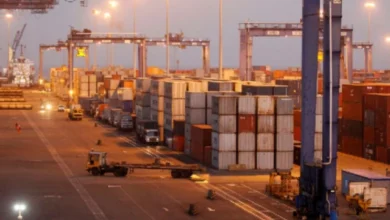
The story of Pakistan’s energy future is currently moving in two opposite directions, creating a multibillion-rupee riddle at Port Qasim.
On one hand, the government is nearing the completion of a massive Rs90 billion railway project designed specifically to haul lignite coal from the Thar Desert to the coastline. The logic is simple: use local coal to save on expensive imports. However, at the very same docks where this coal will arrive, a completely different vision is being sold to the world. Port Qasim is simultaneously branding itself as a future “Green Energy Hub,” courting billions in foreign investment for green hydrogen and eco-friendly shipping fuels.
The Ministry of Maritime Affairs announced recently that it aims to develop Port Qasim into a climate-resilient industrial complex, saying the move would create jobs, usher in investment and ensure sustainable development for the country.
This creates a massive contradiction that risks turning into a historic waste of public money and government funds. Infrastructure projects of this scale are not built for today; they are built for the next thirty years. For the Rs90 billion rail link to “break even” — meaning for it to earn back the money spent to build it — it must remain a busy coal highway for decades.
The global shipping industry is moving towards “net zero” at lightning pace. International companies are already starting to avoid ports that are heavily polluted or dependent on fossil fuels. By the time this railway is fully operational, the “green” shift at Port Qasim might have already made the coal it carries a fuel that nobody wants to buy or use. It suggests that if the world stops using coal in 15 years, this railway will not have reached its break-even point, leaving the Pakistani taxpayer with a “stranded asset” in the shape of a Rs90 billion “ghost track” in the desert.
Two unavoidable questions were sent to the Ministry of Maritime Affairs, the Port Qasim Authority (PQA) and Sindh Energy Secretary Shahab Qamar Ansari; one, asking why the state is investing Rs90 billion in a coal-specific rail line that targets Port Qasim, if Port Qasim’s own master plan is directed to phase out fossil fuels to attract green hydrogen foreign direct investment. And two, how they can justify spending such a vast sum on a coal-specific track that may turn into a stranded asset over time.
The authority argued that the project is necessary for “energy security” to reduce the cost of electricity today. Yet, it offered no clear plan for what happens to the tracks if coal demand vanishes in a decade or so.
“Pakistan’s approach to energy and industrial development is pragmatic and phased. The coal rail project from Thar to Port Qasim ensures the country’s immediate energy security by efficiently transporting domestic coal, reducing reliance on imports, and supporting industrial growth, while our vision for Port Qasim as a green maritime hub – with hydrogen fuel infrastructure and future-ready bunkering facilities — lays the foundation for a sustainable, low-carbon future,” said PQA Public Relations Officer Asad Warsi, attempting to play both sides.
He added that “both initiatives are complementary pillars of a single strategy: meeting today’s energy needs responsibly, while preparing Pakistan to compete globally in the green economy of tomorrow.”
The maritime ministry, which announced the green transition at PQA, did not respond to the questions by the time of filing. Sindh Energy Secretary Shahab Qamar Ansari also remained out of reach.
Commenting on key issues, Optimus Capital Energy Analyst Agam Kumar cited project delays due to cost escalations, funding gaps and misaligned phase timelines. He also pointed to social challenges, including land acquisition of ancestral livelihoods at low compensation, with more land needed as mining expands.
The analyst also mentioned environmental concerns over coal pollution and health risks, while flood-resilient drainage requirements further raise costs and delay risks. As acknowledged by many studies globally, coal is the dirtiest fossil fuel. This overlooks the medical and environmental consequences, as rail transport will lead to large deposits of coal dust into the atmosphere, which contains several harmful toxins such as lead, arsenic and mercury.
Conflicting situation
When taken together, the missed deadlines, ballooning costs and shifting climate narratives point to a deeper policy contradiction. With federal approval and repeated revisions, the Rs90 billion Thar coal rail link remains trapped between an energy past and an uncertain green future. As ports are rebranded climate-resilient and global financing turns away from coal, the project risks emerging not as a driver of development but as an expensive “ghost track”, a lasting reminder that the project’s planning has drifted further out of step with transition realities.